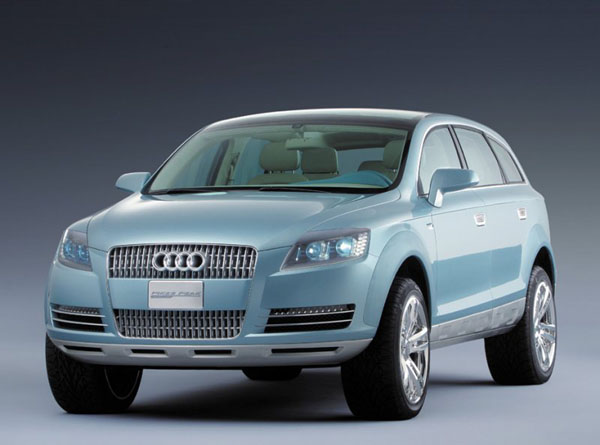
Toyota 4Runner 2011

Toyota 4Runner 2011

Toyota 4Runner 2011
 -->
-->
 2011 mercedes benz cls
 Acura NSX
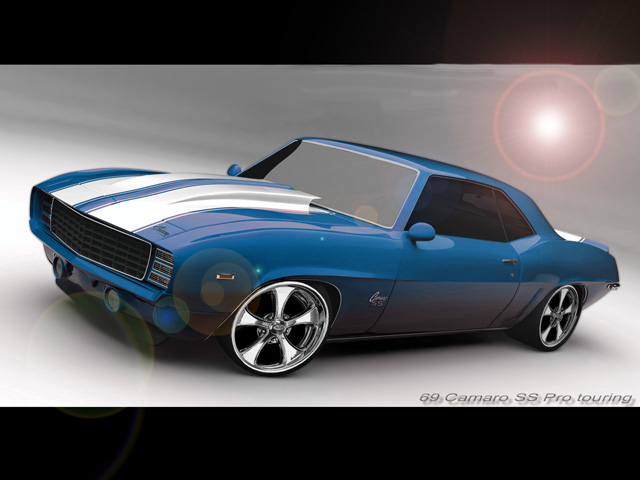
 2011 dodge challenger
 aston martin cygnet
 2011 mercedes ercls
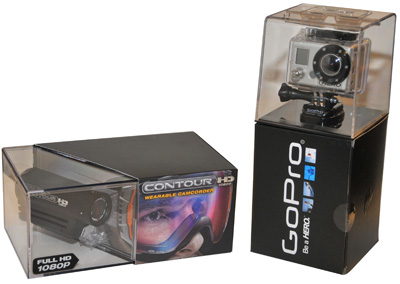
| ContourGPS HD 1080p | GoPro HD HERO Wide | |
| Suggested Retail Price | RM1280 | RM1299 |
| Included mounts | Goggle and flat surface, extra stickem pad | Vented helmet, headband, 2 flat surface, 2 curved surface, adjustable pivot arm, WP housing* with add'l open "audio" back, 2 quick release mounts |
| Included cables | USB | USB, HDTV and RCA |
| Software | Online download available | No |
| Lens/Field Of View (FOV) | 110 deg. on 1080p, WVGA 135 deg. on 960p & 720p | 127 deg. on 1080p 170 deg. on 960 & 720p |
| Adjustable camera settings | via software: Time, 4 video quality, audio gain, bit rate, contrast, exposure, sharpness, spot/center/avg. metering | via camera menu: video settings exposure metering |
| Video settings | 1080p@30fps 960p "full frame"@30fps 720p@30 or 60fps WVGA (848x480 @60fps) | 1080p@30fps 960p "full frame"@30fps 720p@30 or 60fps |
| File Type/codec | QuickTime .MOV/H.264 | MP4/H.264 |
| Battery / included | rechargeable lithium - yes | rechargeable lithium - yes |
| Battery run time | 3 hrs (as per Mfg.) | 2.5 hours (as per Mfg.) |
| Internal memory | No | No |
| Memory Storage | MicroSD up to 16GB | SD up to 32GB |
| Memory included | Yes - 2GB | No |
| Still photos? | No | Yes - 5 mp, several modes |
| Digital zoom? | No | No |
| Remote or LANC | No | No |
| weight w/battery | 4.4oz | 6.3oz in wp case*, 3.5oz without |
| Size L x W x H | 3.75" x 1.27" x 2.15" | 1.6" x 2.77" x 2.5" (in case) |
| Weather resistance | "water resistant" Not WP without WP housing - NOT included | Yes, only with WP housing* (included) |
| Other notes: | GPS tracking, Rotatable lens, dual laser sighting system Online video hosting/posting | *housing must be used for mounting of camera |
 The Caparo T1 is a British mid-engine, rear-wheel drive, two-seat automobile built by Caparo Vehicle Technologies, founded by design director Ben Scott-Geddes and engineering director Graham Halstead, engineers formerly involved in the development of the McLaren F1. The T1 was inspired by Formula One design, and intended as a relatively affordable street legal race car. The T1 was scheduled for production in mid-2007 for a price of GB£235,000 (approx. US$480,000 or €328,000, c.2007), with approximately 25 cars per year built.The T1 has a dry weight of 470 kilograms (1,000 lb), an overall length of 4,066 millimetres (160.1 in), an overall width of 1,990 millimetres (78 in), an overall height of 1,076 millimetres (42.4 in), and a wheelbase of 2,900 millimetres (110 in). It has a fuel tank capacity of 70 litres (18 U.S. gal). On November 11, 2007, the T1 surpassed the Top Gear Power Board leader's time of 1:17.6, then held by the Koenigsegg CCX, with a time of 1:10.6. Immediately after having declared the time and placed it on the Power Board, presenter Jeremy Clarkson removed the record because it did not meet the show's rule that the car must be able to go over a speed bump. However, Ben Scott-Geddes of Caparo has stated that, "the model we supplied to Top Gear was one of our final engineering vehicles without adjustable ride height and electronic active driver control systems which are standard on our production models. When drivers select the 'road' setting, the car is more tractable in slower speed conditions and the ride height is fully adjustable to bring the car up to 90 mm clearance, making it more than capable of driving over speed bumps."
 The exterior of the T1 closely resembles that of a racing prototype or Formula One racing car. It features a carbon fibre aerodynamic low drag body design, composed of individual sections, with an adjustable twin element front wing, single element rear wing, and fowler flaps, and a ground effect diffuser, allowing it to create 875 kilograms (1,930 lb) of downforce at 240 kilometres per hour (150 mph). The wings are replaceable with road and track variations.The interior of the T1 is a two-seat configuration, lacking any amenities and luxuries to reduce excess weight. The passenger's seat is set back from the driver's seat slightly, allowing the seats to be placed closer together, thereby reducing the overall width of the T1. Offered are a head protection system, six-point harnesses for the driver and passenger, compatible with a HANS device, and is designed with a central safety cell made of a high-strength steel roll hoop with a fire system. The dashboard is multi-function with race data logging and speed sensors for traction control and launch control.The chassis of the T1 is composed of a carbon fibre and aluminium honeycomb monocoque with a front composite crash structure and a rear tubular space frame construction. The suspension is of a double wishbone design with tunable anti-roll bars, front and rear, and five-way adjustable race dampers. The braking system is composed of 355-millimetre (14.0 in) steel brake discs, with six-piston and four-piston callipers front and rear, respectively. The brake bias pedal box is fully adjustable and brake pads are available in various compounds. The wheels are all-aluminum 10-by-18-inch (250 by 460 mm) and 11-by-19-inch (280 by 480 mm) front and rear, respectively, with Pirelli P Zero Corsa tyres. Magnesium 10-by-18-inch (250 by 460 mm) and 11-by-18-inch (280 by 460 mm) wheels front and rear, respectively, with Pirelli slick and wet track tyres are available as optional equipment.
 The T1 sports a 116-kilogram (260 lb), 32-valve, 3,496-cubic centimetre (3.5 L), all-aluminium, naturally-aspirated, Menard V8 engine with cylinder banks mounted at 90° and lubricated via a dry sump oil system. The engine has gone through several designs, previously including a smaller 2.4-litre supercharged unit. The production design generates a maximum power of 575 horsepower (429 kW; 583 PS) at 10,500 revolutions per minute and a maximum torque of 310 pound-feet (420 N·m) at 9,000 revolutions per minute, giving the car a power-to-weight ratio of 1,223 horsepower per tonne (912.8 kW/t). In addition, the engine has been reported to successfully reach 700 horsepower (520 kW; 710 PS) of power on methanol fuel. The engine is controlled via a fully tunable Pectel SQ6 engine control unit and the throttle is controlled via a throttle-by-wire system. The T1's gearbox is a 6-speed sequential made of a magnesium and carbon construction that has a variety of available gear ratios and utilizes a pneumatic actuator to shift, able to upshift in 60 milliseconds and downshift in 30 milliseconds. Furthermore, the drivetrain incorporates a limited slip differential and equal length hollow tripod driveshafts. The T1 has an estimated maximum speed of 205 miles per hour (330 km/h) on a low downforce setup. From a standing start, it has an estimated 0–100 kilometres per hour (0–62 mph) time under 2.5 seconds and onto 160 kilometres per hour (99 mph) in 4.9 seconds, depending on tyre setup. It is also capable of an estimated lateral acceleration of up to 3 g and braking deceleration of 3 g, depending on tyre setup. When driving the Caparo, Jeremy Clarkson, presenter of the British car show Top Gear, had stated that limited aerodynamic downforce is created at slow speeds. As a result, the car had low levels of lateral traction while cornering if it was not being driven rapidly. Aerodynamically, this vehicle is designed such that air passing over the body at high rates of speed "pushes" the vehicle against the road (allowing for higher cornering speeds). Clarkson criticized the handling characteristics proposing that if the vehicle was better at negotiating corners and bends in the track at higher speeds than at lower speeds. On a wet track or cold road surface, the slow speed handling would deteriorate further.