Get Paid To Promote, Get Paid To Popup, Get Paid Display Banner -->
Showing posts with label Volvo. Show all posts

Monday, July 11, 2011

Volvo c30

The Volvo C30 is a small family coupe produced by Volvo Cars. The C30 is a three-door, four-seat hatchback powered by straight-4 and straight-5 engines. The car is a hatchback version of the S40/V50/C70 range, and uses the same Ford C1 (or Volvo P1) platform. It is being marketed as a premium hatchback or a sports coupe specially designed for first-time Volvo buyers and the youth market. Production is expected to be 65,000 units a year, 75% for sale in the European market. The production car was officially unveiled at the 2006 Paris Motor Show.
An upgraded sound system includes a digital 5×130 watt ICE Power amplifier from Alpine featuring Dolby Pro Logic II Surround, and 10 loudspeakers from Danish Dynaudio.
All About Volvo c30 color
Silver Volvo c30 Hatchback
Elegant Silver Volvo c30 Front Side View.
Driving Interior Volvo c30
The 2008 model year brings some minor changes, mostly adapting the interior to the facelifted S40/V50 and including as standard an Aux audio socket.
The 2009 model year moved the VOLVO badge from the hatch handle to the glass area above it, enlarged the font and increased the space between the letters. It also brought other small changes such as the hard load cover now being standard.

Sunday, July 10, 2011

Volvo s60

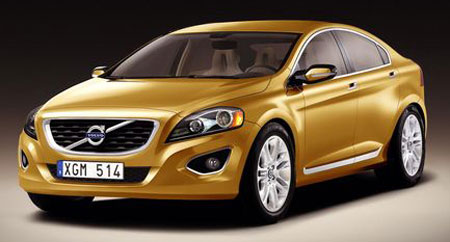
Volvo s60
Volvo S60 is a entry-level luxury car / compact executive car built by Volvo that was first introduced in 2000. It uses the Volvo P2 platform, which is shared with the Volvo V70, Volvo S80 and Volvo XC90. It was one of the first "curvy Volvos" designed by Peter Horbury and appropriately used the tagline "Revolvolution" in its advertising campaign. The model was refreshed in 2004.

Tuesday, June 21, 2011

volvo c70

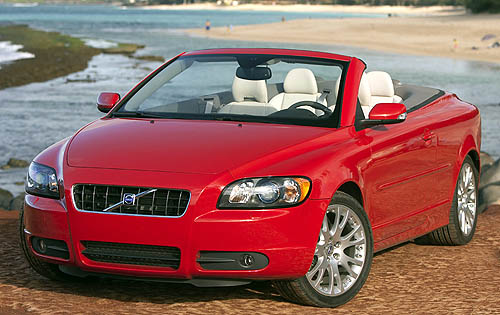
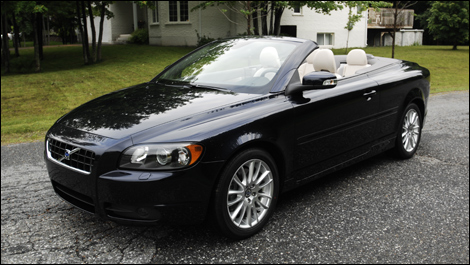
Volvo C70

The Volvo C70 is the second-generation convertible from Volvo Cars. It was launched at the Frankfurt motor show in September 2005. The aim was to create two cars in one - without compromising on either. A three-piece retractable hardtop transforms the Volvo C70 from coupe to convertible at the touch of a button.


Design

The Volvo C70 is short and low but relatively wide. Its proportions and design were chosen to give the car a powerful profile. In order to ensure harmonious lines both with and without the roof, Volvo's designers decided to first draw the Volvo C70 as a coupe. Only after they were satisfied with the result did they make the necessary adjustments to create a convertible out of the finished design.

The car's haunches flow to the rear, giving a dynamic stance and reinforcing the sensation of a protective collar around the rear seat passengers. The upward sweep is balanced visually by the wave-shaped sill line.
The tail section has an abrupt cut-off. The tail lamps echo the design language of Volvo's sedan models, but with a slimmer profile to emphasise the C heritage. As of model year 2009, the space between the letters in the rear Volvo emblem has been increased in order to enhance visibility of the brand. The individual letters will also be larger.

A new rear spoiler is a discreet colour-coordinated accessory. It enhances the car's sporty appearance and helps improve the car's handling characteristics - especially at high speeds. The spoiler is made of lightweight plastic.


An Autofold function has been introduced for the power retractable mirror option. With the Autofold function, the mirrors are set to automatically fold in when the car is locked. When the car is unlocked, the mirrors will fold out again.

The interior is inspired by Scandinavian product design with the emphasis on uncluttered surfaces, honest materials and good function. The C70 also has features such as Volvo's ultra-slim, visually free-floating centre console, a specially developed upholstery material (Vulcaflex) and interior space that is remarkably generous for this type of car.

The Volvo C70 is designed for four adults. The rear has two pronounced, deeply contoured seats.


The retractable hardtop is raised and lowered in about thirty seconds with the help of an electric motor and hydraulics. When lowered, it is fully concealed in the luggage compartment. Thanks to a special load assistance function, the remaining space can nonetheless be utilised very effectively for luggage.

The tunnel console and the armrest have been given a design matching the dashboard's unique, floating centre console and with the same type of decor inserts. The aim has been to provide the highest possible feeling of quality while still increasing the flexibility and storage possibilities.

BLIS (Blind Spot Information System) is available in the Volvo C70, making it an optional extra in all Volvo models. As a result, the C70 model gets the same rear view mirrors as the Volvo S40 and Volvo V50.

In order to minimise the risk of children unintentionally opening the windows whilst driving, or opening the roof in the C70 model, these controls have been given a design with protective "barriers" situated between the buttons.


Safety

Volvo Cars adopts a holistic view of safety that encompasses both Preventive and Protective safety. Preventive safety is closely linked to the car's driving properties. The Volvo C70 is twice as torsionally rigid as the previous C70 model, thanks to an advanced and reinforced body structure. Combined with a sturdy chassis, torsional rigidity helps give the car consistent, predictable behaviour on the road.

Volvo Cars has developed various information systems designed to help the driver while on the move. One such system is IDIS (Intelligent Driver Information System), which for instance delays incoming phone calls in complex traffic situations that require the driver's undivided attention.

Protective safety in the Volvo C70 is structured around a network consisting of exterior and interior safety systems that interact with one another to reduce the risk of occupant injury in a collision. The exterior systems have the task of distributing and absorbing incoming collision forces so that the passenger compartment remains as intact and undamaged as possible. The body is therefore built in the form of a metal cage made of different grades of steel, where all the components interact with one another to ensure controlled deformation.

Since the Volvo C70 does not have a fixed roof, the body has been reinforced in a variety of ways to allow the rest of the car's structure to absorb a greater proportion of the impact energy. When a car rolls over, its windscreen frame is subjected to immense force.

In the Volvo C70, the windscreen pillars are made using hydroforming technology, whereby it is possible to make each pillar in one single piece but with varying thickness and high strength along its entire length. Even the ROPS bars - the metal hoops that come up behind the rear passengers in the event of a roll-over scenario - are particularly sturdily dimensioned and are activated exceptionally quickly.

The interior safety systems aim to keep the passengers securely in place and also to reduce the risk of serious injury. In order to provide the most effective protection possible, Volvo Cars has developed a number of in-house systems, such as WHIPS (Whiplash Protection System), SIPS (Side Impact Protection System) and IC (Inflatable Curtain). All are fitted as standard in the Volvo C70.

The inflatable curtain has been tailored for the convertible and is installed in the door. It deploys upwards. In order to further boost protection in the event of a roll-over scenario, the curtain deflates slowly. Every seat is equipped with a three-point seat belt, belt pre-tensioner and head restraint. The highest possible safety requires that all the car's occupants always use their seat belts.

The Volvo C70 can be equipped with the HomeLink system. The system makes it possible to operate up to three remote controlled home devices (e.g., garage door, home alarm system, etc.) via a module integrated into the sun visor. HomeLink contributes to easy and safe access to your home.

Driveline and handling
The engines in the Volvo C70 are five-cylinder, transversely installed in-line units. A five-cylinder engine gives low vibration and smooth operation. Together with large displacement, the five-cylinder configuration provides high torque across a broad rev band, and thus also swift acceleration and excellent driveability within a wide speed range.

The Volvo C70 T5 is the top model and it features a turbocharged engine mated to either a five-speed automatic transmission or six-speed manual gearbox. The chassis, with spring struts at the front and Multilink axle at the rear, is set up for stable, reassuring driving manners and alert steering response. The Multilink rear axle is an independent rear suspension system featuring a number of links and it is designed to offer a good combination of controlled wheel movements and high ride comfort. Some of these links have the task of providing a certain degree of anti-skid steering effect. A long wheelbase and wide track, together with a very torsionally rigid body, contribute to the predictable, controlled driving manners. What is more, chassis height has been substantially lowered front and rear to further benefit directional stability.

Volvo's advanced DSTC (Dynamic Stability and Traction Control) stability-enhancing system is fitted as standard. DSTC cuts in and helps stabilise the car if it registers any tendency to skid.
Audio and information

The Volvo C70 can be equipped with Bluetooth® - a technology that enables wireless communication. By connecting Volvo's Bluetooth device to the car's audio system and a Bluetooth compatible cellular telephone, easy and practical hands-free phoning is made possible.


The environment

The Volvo C70 is designed and equipped to impact as little as possible on the global environment and to offer a clean and healthy interior climate. Petrol engines with low internal friction, efficient combustion and advanced exhaust filtration technology result in low emissions.

Volvo's IAQS (Interior Air Quality System) effectively reduces the amount of particles, pollen, gases and certain unpleasant odours in the air entering the cabin. In addition, all textiles and leather are certified under ÖKO-TEX 100. This is an international standard, which ensures that fabrics and hides have been thoroughly tested to check for certain allergy-inducing substances and emissions.

Descriptions and facts in this press material relate to Volvo Cars' international car range. Described features might be optional. Vehicle specifications may vary from one country to another and may be altered without prior notification.

Sunday, June 19, 2011

volvo s40

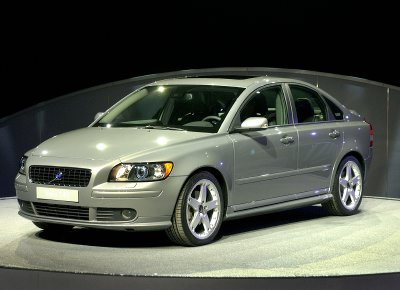
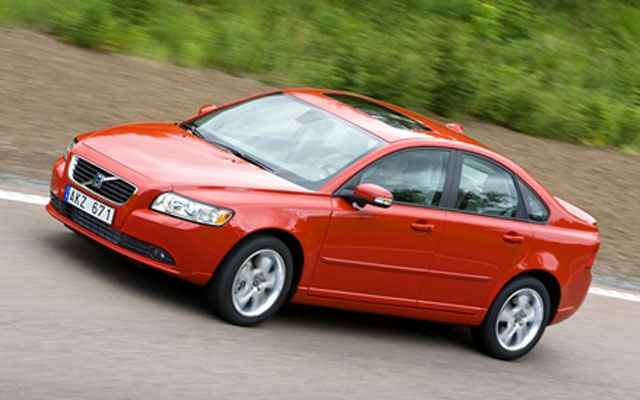
Volvo S40
DRIVING DOWN THE ROAD
WITH CAREY RUSS
Volvo, a style leader? Not long ago, that would have been the theme for a Swedish comedy routine. Volvos looked like the boxes they came in. And the only thing less likely than a stylish Volvo would have been a sporty Volvo.
Sure, Volvo has been making turbocharged models since the early 1980s, but Volvo turbos never had much of a following outside a relatively small group of enthusiasts. While those old boxes could be made to go fast enough to embarrass better-known German cars, the work to do so was the province of private parties, at least until Volvo went racing with a factory-backed effort in the British Touring Car Championship in the early 1990s. The initial weapon of choice was a modified 850 wagon, an any laughter was soon quelled when it not only won races, but the championship as well.
When Volvo introduced its first smaller, less-expensive sedan, the S40, in Europe in 1995, that became the basis for Volvo racing efforts. And success continued. The 1995 S40 was notable for other reasons, too - it was one of the first Volvos in recent times to become less boxy. It made its way to the U.S. in 1997.

Meanwhile, Volvo was further developing its own styling language. The first fruit of this was its top-of-the-line S80, which was a design revelation when it was revealed in mid-1998. As then-head designer Peter Horbury put it at the time,

The S80 was followed by the smaller, but similarly-styled S60 sedan and V70 wagon, and Volvo developed a new model nomenclature to go with the new style. Even first digit for sedan, odd for wagon. The S40, and its V40 wagon companion, soldiered on. But with newer models from both German and Japanese competitors in the past few years, they aged rapidly. What to do?
What else but a new generation of S40 sedan, with a companion V50 wagon? The second-generation S40 sedan and V50 wagon are the sportiest of the current Volvo lineup, with the exception of the S60 and V70 ``R'' models, and give Volvo a solid presence in the premium sport-compact segment.
The biggest difference between the S40 and V50 is, of course, that the V50 is a wagon and the S40 is a sedan. Each body style has its advantages and disadvantages - the wagon has a larger carrying capacity and is more versatile, but the sedan weighs 150 lbs less, for better acceleration and handling. It's a question of sport versus utility. Both come with the same power choices - 2.4-liter, 168-horsepower naturally-aspirated or 2.5-liter, 218-hp turbocharged and intercooled inline five-cylinder engines, and turbo versions of both are available with Volvo's all-wheel drive system. The V50 T5 AWD I drove a few months back had the optional five-speed automatic transmission, while the S40 T5 AWD sitting in the driveway at the moment has the standard six-speed manual. The difference between the two transmission choices is the difference between ``sporty'' and ``sports,'' with the manual showcasing the sports-car aspects of the smallest Volvo's personality. In any trim, wagon or sedan, manual or automatic, the new baby Volvo combines the sportiest interpretation of Volvo's current styling with the best performance in the regular Volvo lineup.
APPEARANCE: The broad-shouldered Volvo sedan style that debuted on the elegantly-proportioned S80 was made sleeker with the coupe-like S60, and now has a playful and youthful sport-compact look in the form of the S40. That is only fitting as the S40 is the Volvo designed for younger and more sport-oriented drivers. The S40 is nearly as tall as the mid-sized S60, and has a similarly-long, nearly-fastback roofline, but its shorter wheelbase and length give it chunkier proportions that are playfully muscular. The British might call it ``cheeky,'' as in bold and perhaps offensive to the established order. That's too bad for the established order, but good for Volvo.
COMFORT: Except for the obvious differences in layout from its sedan body style, with a separate trunk, the S40 shares the V50's interior styling and appointment. This includes the Scandinavian Modern free-standing brushed-aluminum center stack that looks to be sourced from a high-end audio manufacturer. Not only is it unique, elegant, and very trick-looking, it's highly functional, with self-explanatory controls for the audio and climate-control systems. And it allows extra storage space in the cabin. It sets the tone for the S40's interior, and helps place the S40 at the upper end of the sport-compact class. The front seats, while different from those in larger Volvos, are just as comfortable. The driver's is power-adjustable, while the passenger's is manual. Upholstery is a grippy cloth. The rear seat is larger than in many competitors, and a 60/40 split with flip-and-fold cushions allows a flat load floor. The trunk is large in capacity, if a bit small in opening size - a common characteristic of small, or even medium-sized sedans. A bicycle can fit through the opening and inside with both wheels removed, but would be easier to get into the V50 wagon. Still, the S40 offers great interior style and design, benchmark comfort, and good versatility.

Friday, June 17, 2011

volvo s60

volvo s60


The 2012 Volvo S60 has been designated as a Top Safety Pick by the Insurance Institute for Highway Safety for its good performance for front, side, rollover, and rear crash protection, plus standard electronic stability control (ESC).

The previous generation of the S60 earned good ratings in the Institute’s front and rear evaluations, but for 2005-09 it was rated acceptable in the side impact test.

The previous model wasn’t evaluated for roof strength in rollover crashes. The new model improves to good in the side impact test, and earns a good rating in the roof strength test.

The roof of the S60 withstood a force equal to 4.95 times the car’s weight. By comparison, the current federal standard is 1.5 times weight. Institute research demonstrates that occupants of vehicles with strong roofs are much less likely to sustain serious injuries in rollover crashes.

In addition to good crash test ratings, winners must have ESC, an important crash-avoidance feature, which is standard on the S60.

The 2012 Volvo S60 and all new Volvo vehicles, comes with Volvo’s safe and secure coverage plan. The plan includes a five-year/60,000-mile warranty, five-year/60,000-mile wear and tear coverage (brake pads, rotors and wiper blades), five-year/60,000-mile complimentary factory scheduled maintenance and five years of unlimited mileage roadside assistance.

A photo of the S60’s stunning interior, featuring a crystal floating dash carved by the world-famous Swedish glassworks Orrefors, was released last month. But this is the first chance we’ve had to catch a glimpse of the 3-series rival’s curvy exterior.

The original S60, released back in 2000 and despite a slight refresh in 2004, is essentially the same car nine years later. Like most Volvos, it boasts a long list of safety equipment, seating that is particularly comfortable on long rides, and distinctive exterior styling.was a milestone model for the company marking a move away from Volvo’s trademark boxy design, with its smooth silhouette, making it a multipurpose concept car of the automobile company.

The interior design is of its kind ever, with a compatible satellite world receiver dashboard, auto tracking system for owners, excess speed controller which aids the speed of a careless driver with an automatic break in the point of accident.

The S60 concept has taken the lead as one of the second generation design, which looks like it will cause a similar stir with its sleek roofline and muscular haunches.

The S60 is considered underpowered compared to most of its competition. Its quirky inline-five-cylinder engine is smooth, but doesn't match the acceleration of German or Japanese competitors.

The 2009 Volvo S60 is available in two trims, the 2.5T and the T5. The 2.5T is available with all-wheel drive. Both have gone more upscale for 2009, with standard features that were previously included in premium and advanced packages.


Monday, April 25, 2011

2011 Volvo S40 cars wallpapers

2011 Volvo S40 cars wallpapers
Upcoming 2012 chrysler Car news: http://masti-jokes.blogspot.com/search/label/chrysler
volvo s40volvo s402009 Volvo S40 Will Become aVolvo s40, Volvo S40 in2009 Volvo S40 Video Specs2005 Volvo S40 Evolve front2.Volvo S40. Model Update

2011 Volvo S40 Estate review and wallpapers

2011 Volvo S40 Estate review and wallpapers
Upcoming 2012 Jaguar Car news: http://masti-jokes.blogspot.com/search/label/Jaguar%20cars
Volvo S40 and Volvo 850 Estate, stars of the BTCC, now starring in video racing gameNew Volvo S40 saloon and newGrey estate. VOLVO V50 1.8 SGreen estate. VOLVO V40 2.0 S,Volvo V50 1.6D DRIVe R DESIGN,Volvo V50 Sport d (e4), EstateThe Volvo S40 is a compactVolvo S40 and Volvo 850 Estate, stars of the BTCC, now starring in video racing game